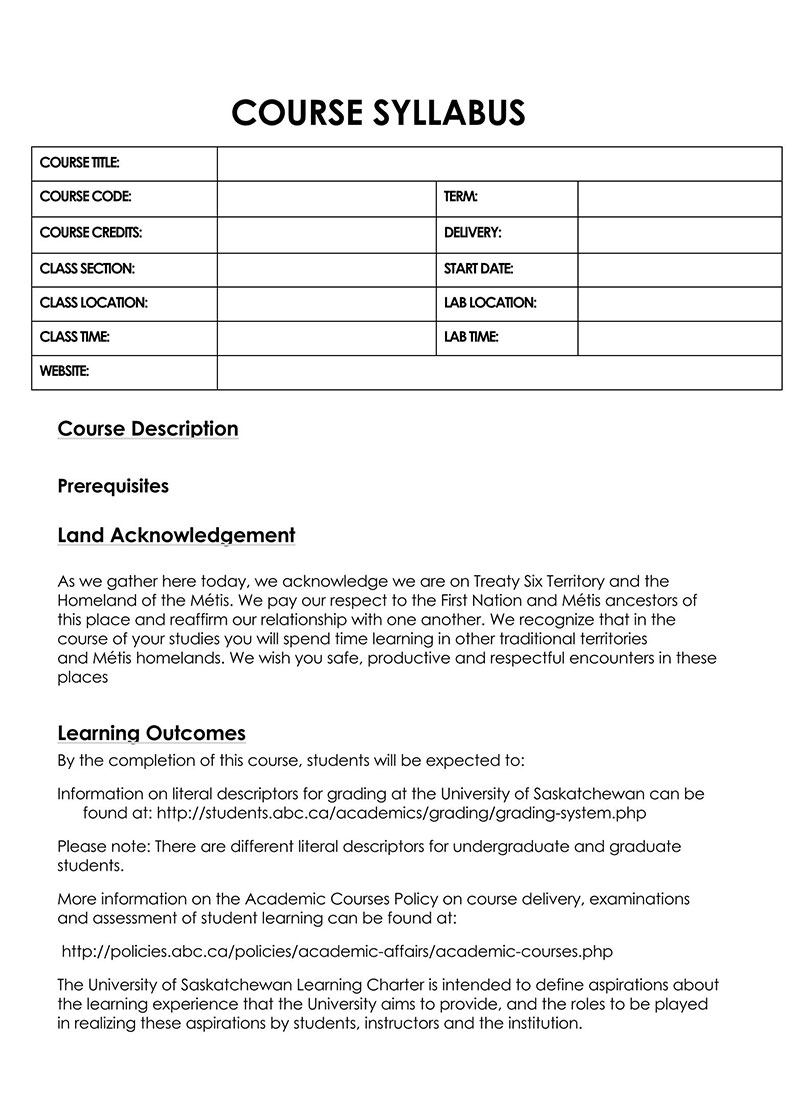
Crafting a course outline from scratch at the start of every semester can be a daunting and time-consuming task for any educator. The process involves juggling course objectives, scheduling, policies, and a myriad of institutional requirements. A well-structured Blank Syllabus Template serves as a powerful tool to streamline this process, providing a pre-formatted framework that ensures no critical information is overlooked. It acts as a foundational guide, allowing instructors to focus their energy on tailoring the content to their specific course and students, rather than reinventing the wheel each term.
The syllabus is far more than a simple schedule of topics; it is the single most important document you will share with your students. It functions as a contract, a roadmap, and a reference guide all in one. It sets the tone for the entire course, establishing clear expectations for academic performance, behavior, and communication from the very first day. A comprehensive and clear syllabus can prevent countless misunderstandings, reduce student anxiety, and create a more organized and equitable learning environment for everyone involved.
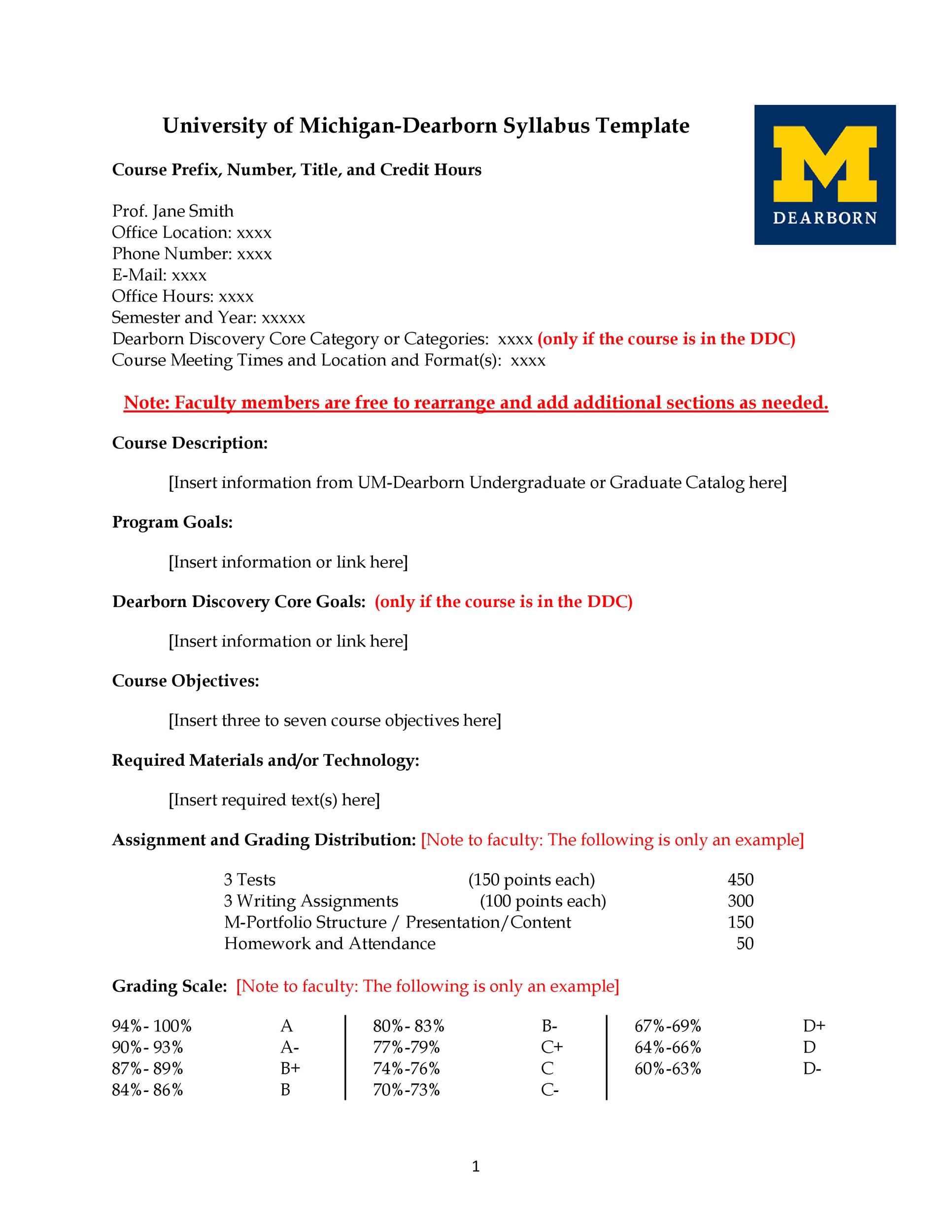
By starting with a template, educators can ensure consistency across their courses and adhere to departmental or university standards. This is particularly beneficial for new instructors who may be unsure of what to include. For seasoned professors, a template saves precious time that can be better spent on curriculum development and research. Ultimately, using a template is not about creating a generic, one-size-fits-all document. Instead, it's about building upon a solid, proven structure to create a customized, engaging, and highly effective syllabus that supports student success.
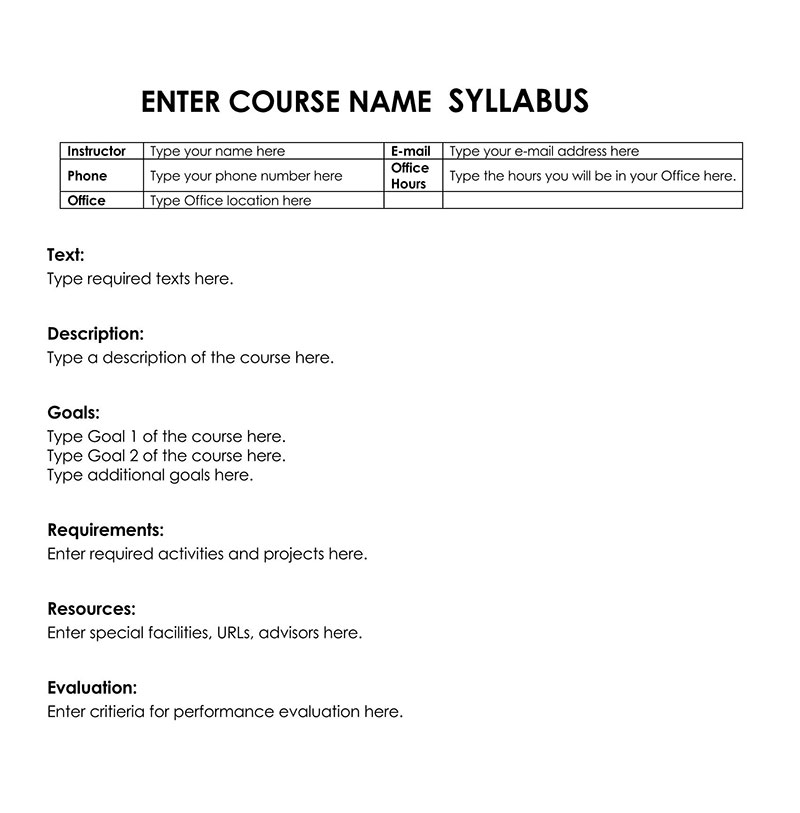
This guide will walk you through everything you need to know about using a syllabus template effectively. We will break down the essential components that every syllabus should contain, offer tips on how to customize a template to reflect your unique teaching style, and explore where to find the best resources. Whether you are a first-time teaching assistant or a tenured professor, this information will help you craft a syllabus that serves as an invaluable resource for you and your students throughout the semester.
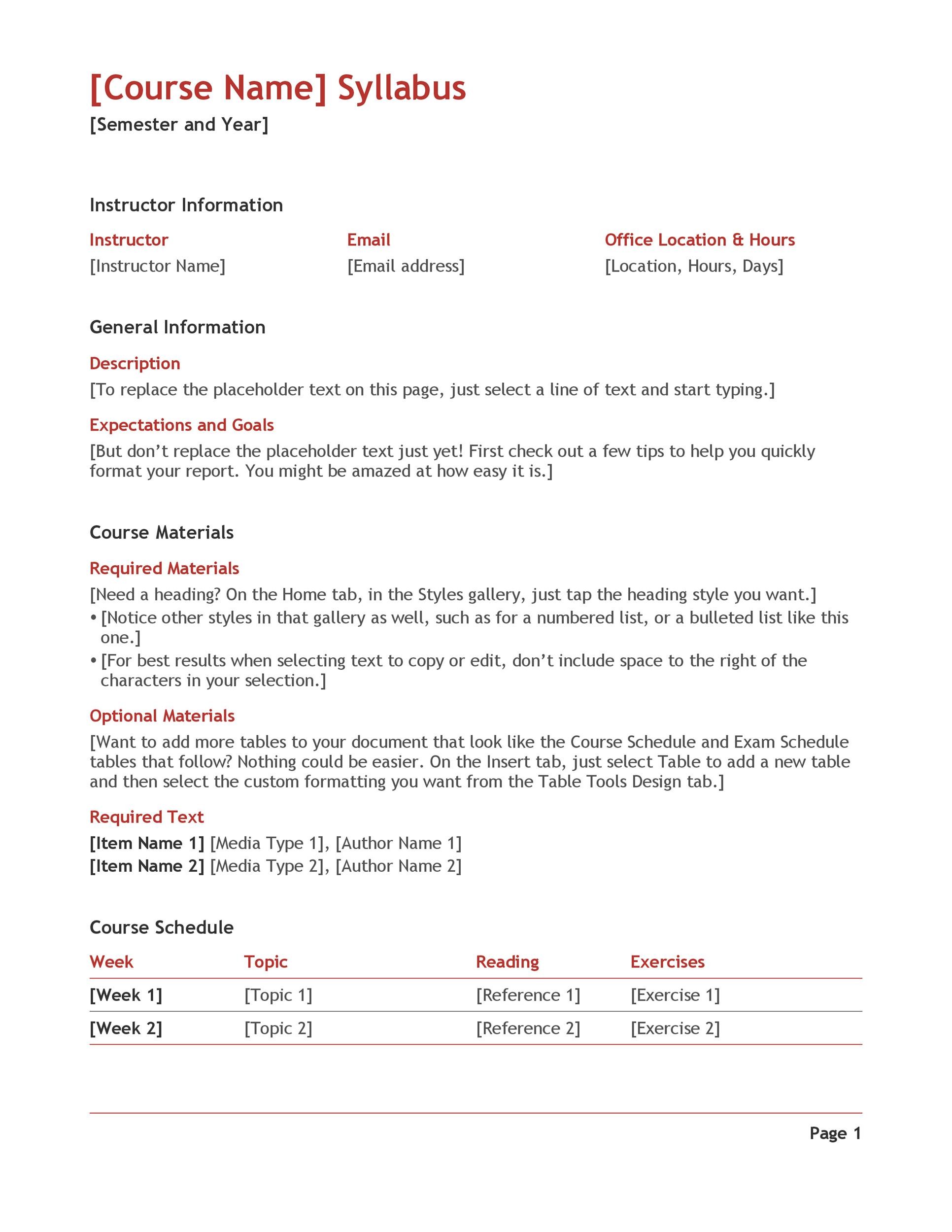
The Essential Components of a Comprehensive Syllabus
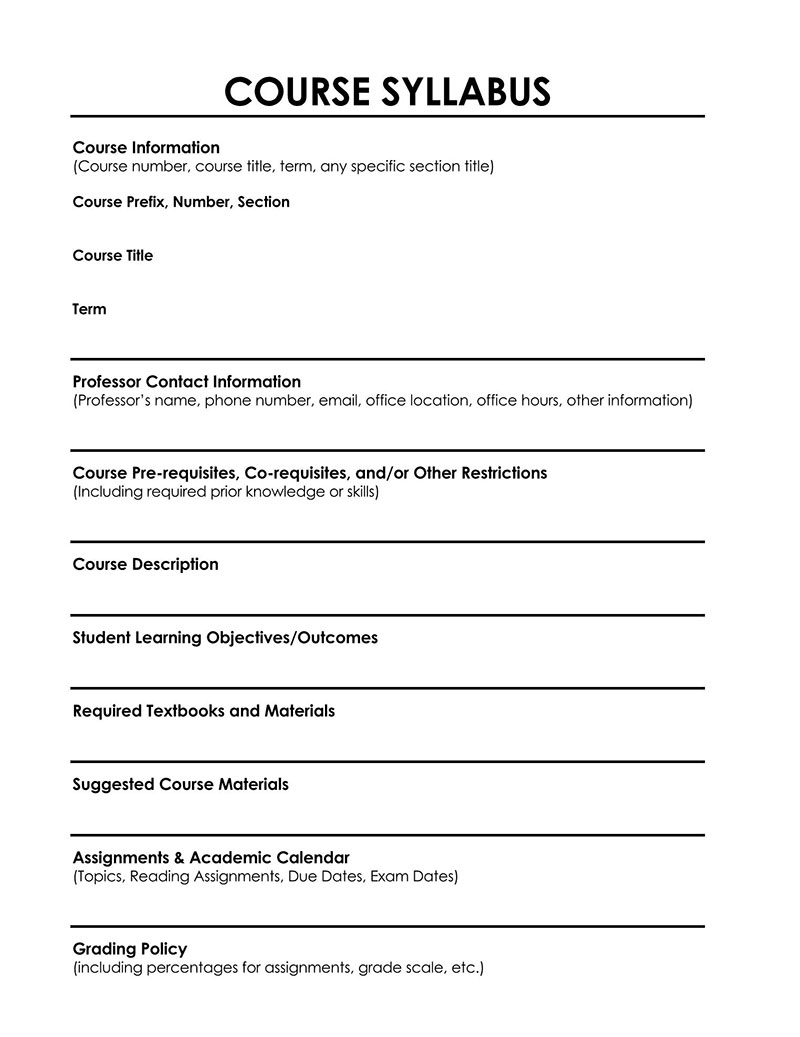
A great syllabus is built on a foundation of clear and comprehensive information. While the specific details will vary by course and institution, certain core components are universally essential. A good template will include dedicated sections for each of these elements, ensuring you cover all your bases.
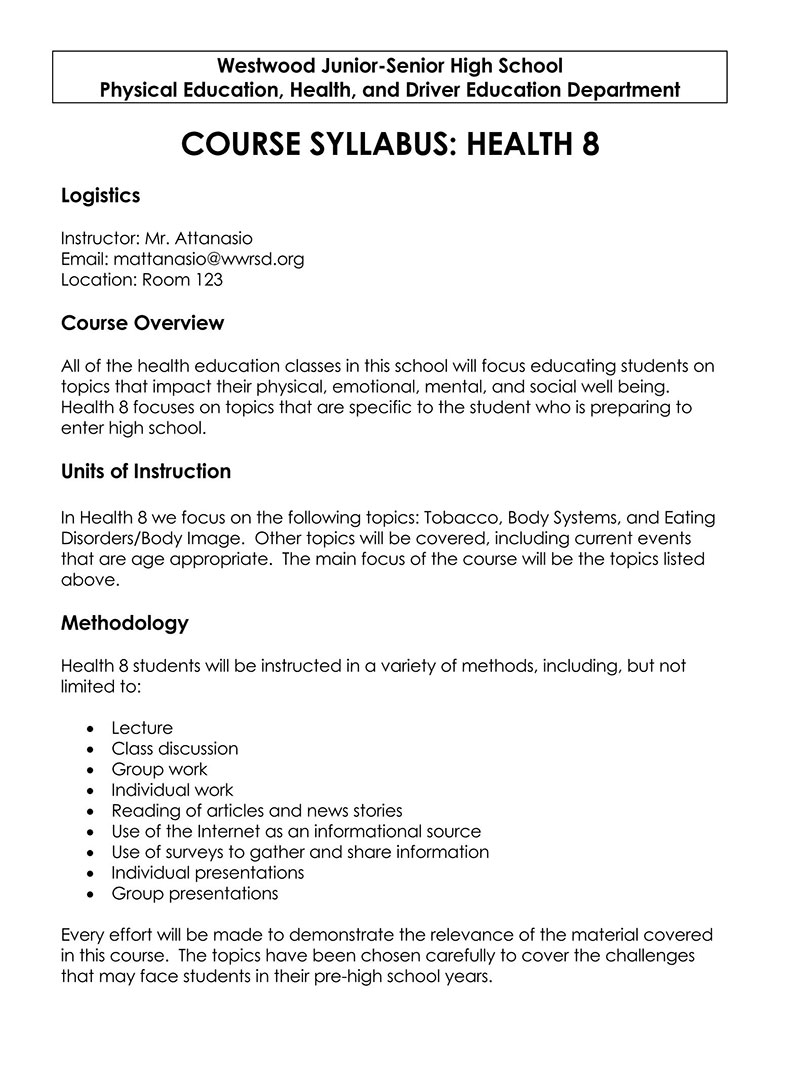
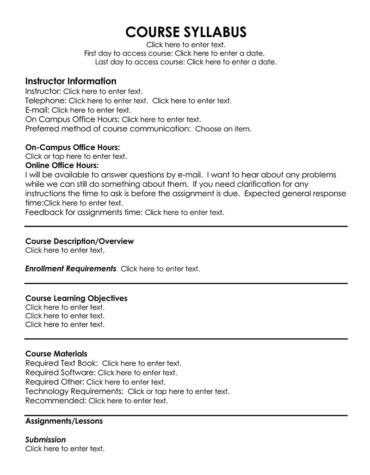
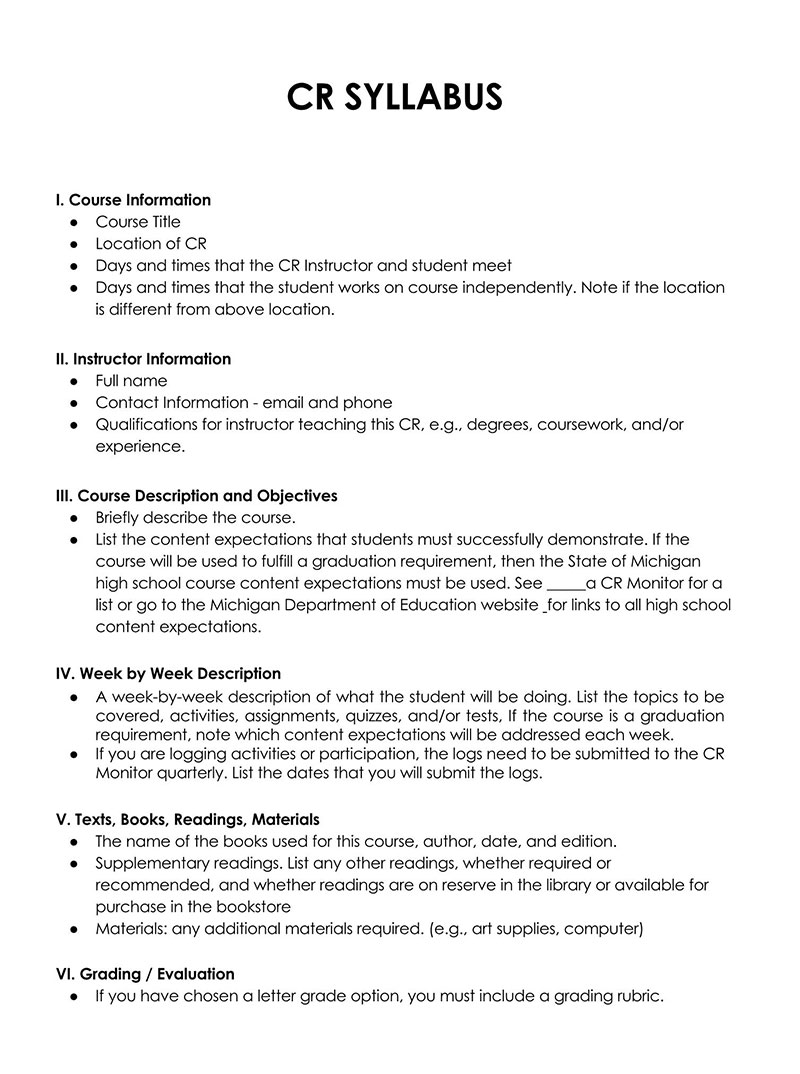
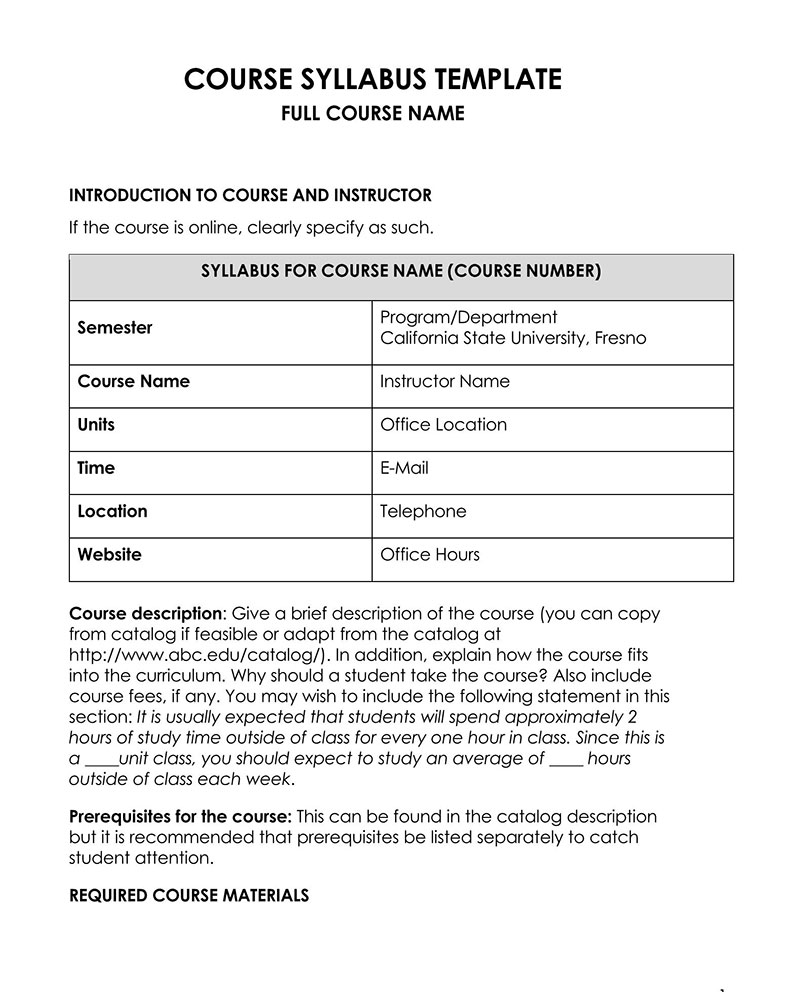
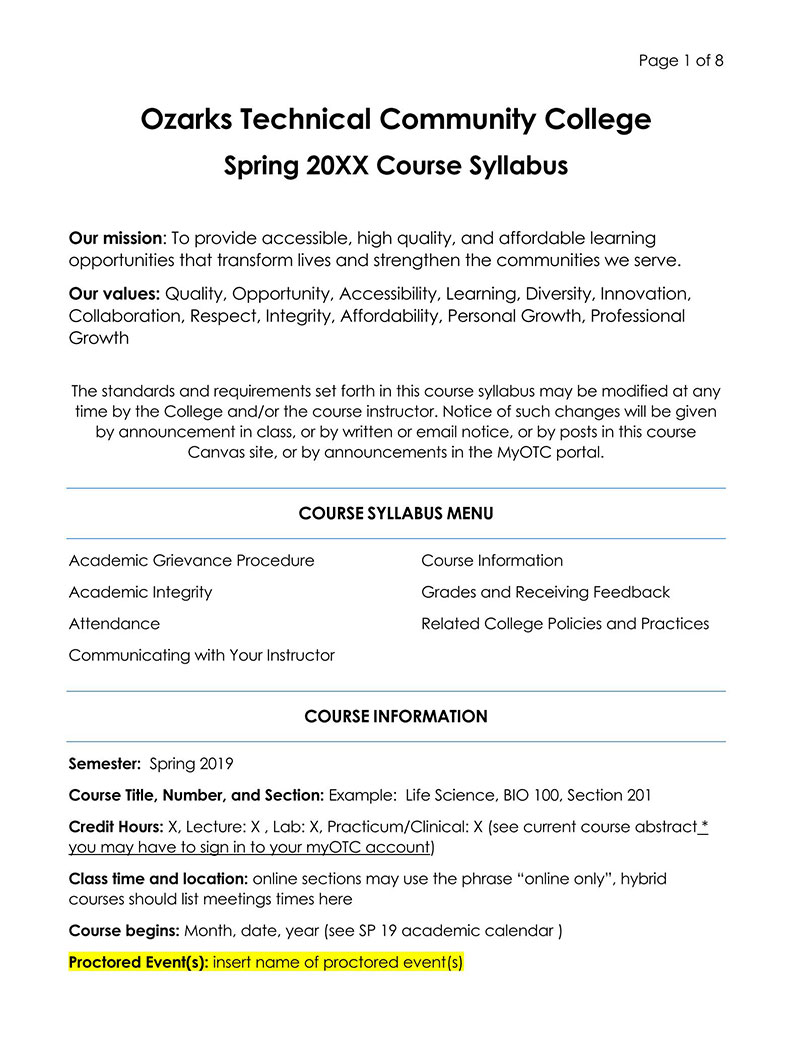
Instructor and Course Information
This is the most basic yet crucial section. It provides students with the "who, what, when, and where" of the course. It should be placed at the very top for easy reference.
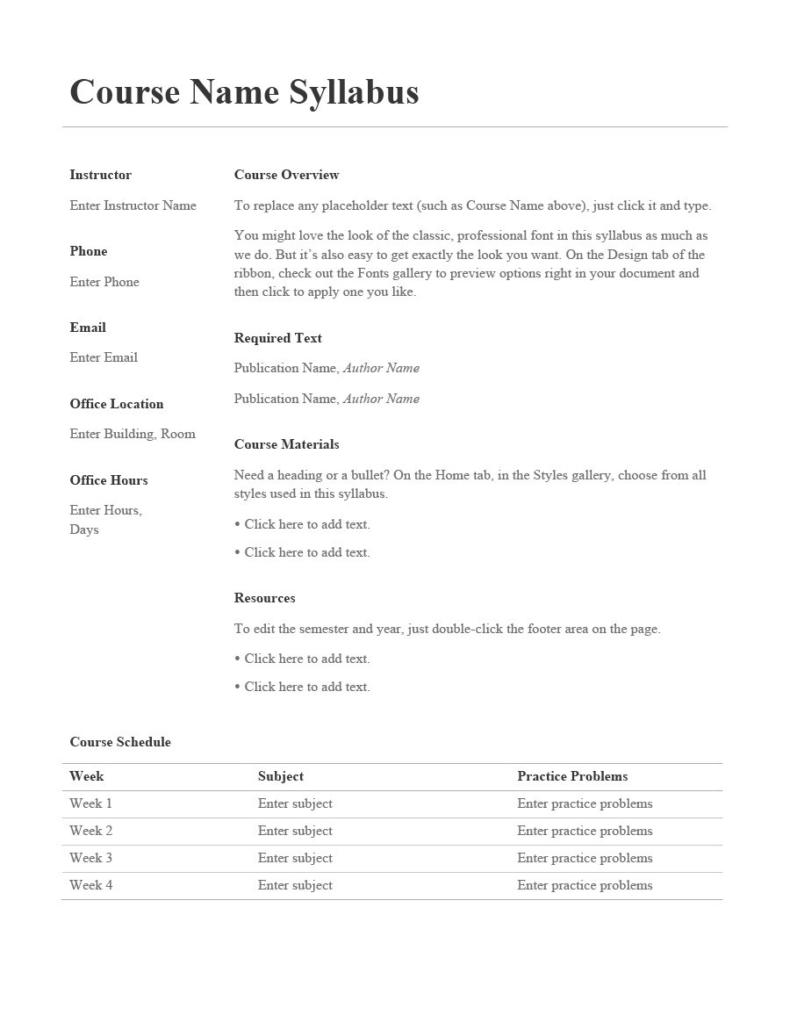
- Instructor Details: Your full name, title, office location, office hours, and preferred contact method (email is most common). Providing clear office hours and your policy on email response times sets important communication boundaries.
- Course Identification: The full course title, course number (e.g., ENGL 101), section number, and number of credit hours.
- Logistics: The days, times, and location (building and room number or online platform link) of class meetings.
Course Description and Learning Objectives
This section sets the academic context. The description gives a brief overview of the course, while the learning objectives define what students will be able to do upon successful completion.
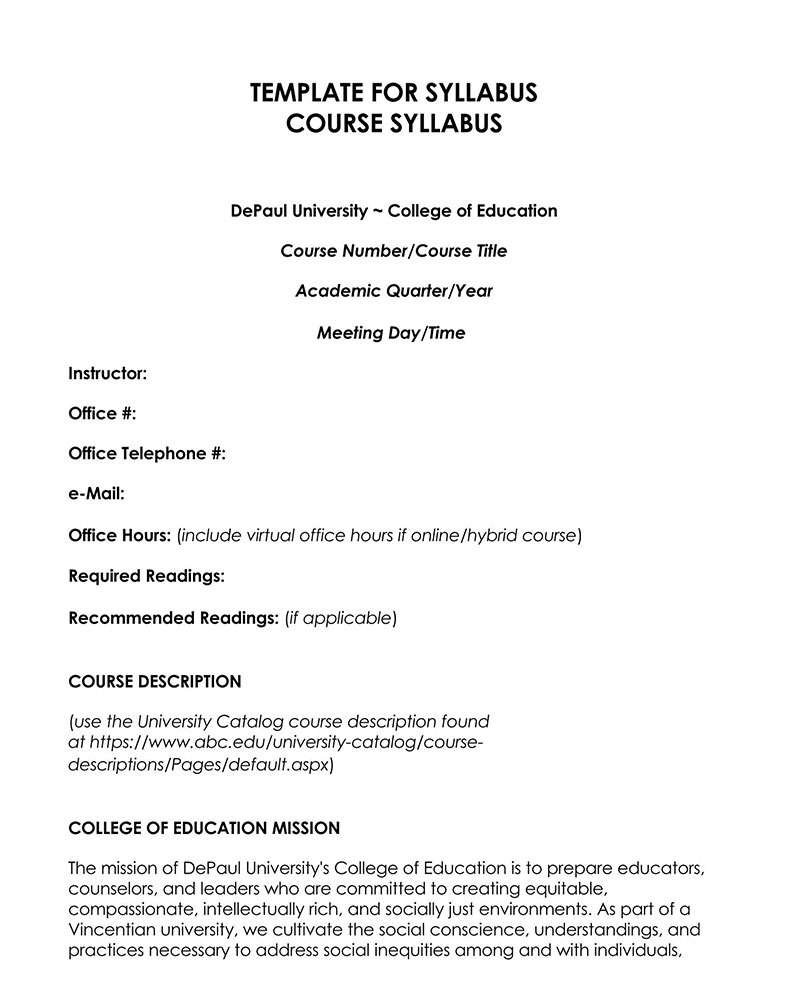
- Course Description: This is often the official description from the course catalog. You can supplement it with a more personal paragraph explaining your approach to the subject and what makes the course exciting or relevant.
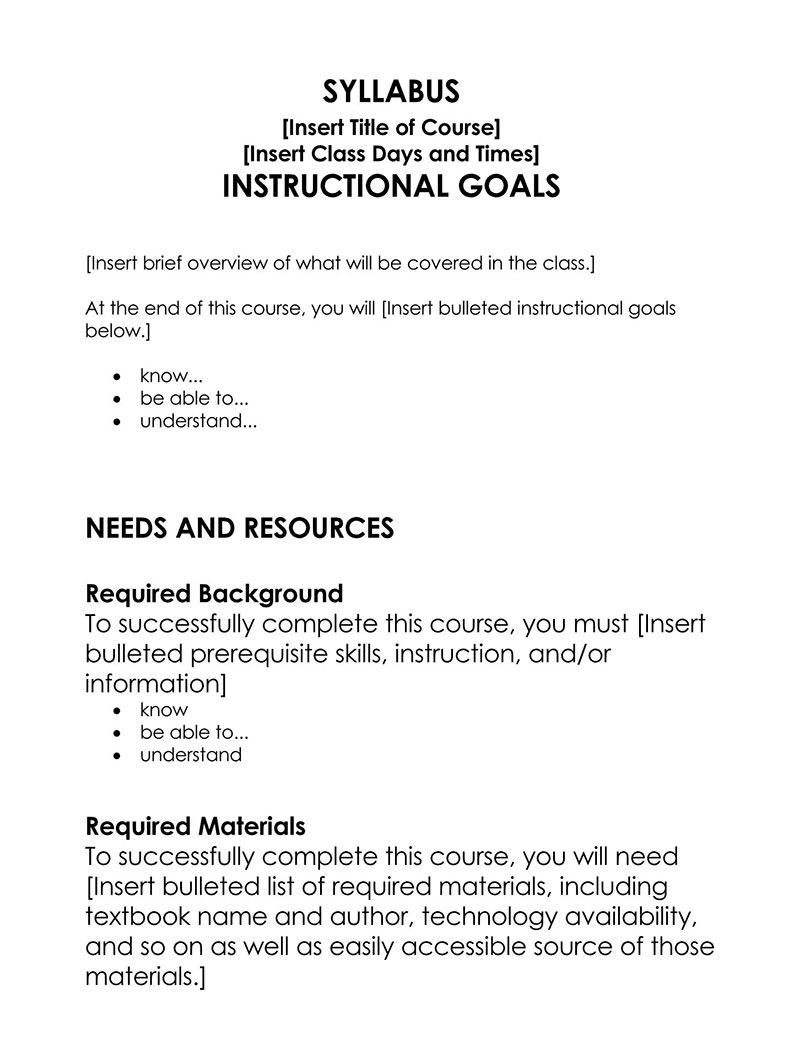
- Learning Objectives/Outcomes: These are specific, measurable statements that complete the sentence: "By the end of this course, students will be able to..." For example: "...analyze 19th-century poetry," "...design a functional website using HTML and CSS," or "...apply statistical methods to real-world data." Well-defined objectives help students understand the purpose of the course and how their learning will be assessed.
Required Texts and Materials
Clearly list all required resources so students can acquire them before the course begins. Ambiguity here can cause early-semester stress for students.

- Textbooks: Include the full title, author(s), edition, and ISBN for each required book. Specify whether a physical or digital version is acceptable. It's also helpful to note if the textbook is available at the campus bookstore or on reserve at the library.
- Other Materials: List any other necessary items, such as specific software, lab equipment, art supplies, or access codes for online learning platforms.
Grading Policy and Assessment Methods
Transparency is key when it comes to grading. This section should eliminate any confusion about how a student's final grade is calculated.
- Grade Breakdown: Use a table or list to show the weight of each graded component (e.g., Midterm Exam: 25%, Final Project: 30%, Homework: 20%, Participation: 15%, Quizzes: 10%). Ensure the percentages add up to 100%.
- Grading Scale: Define the scale that converts percentage scores into letter grades (e.g., 93-100% = A, 90-92% = A-, etc.).
- Description of Assessments: Briefly explain the format and purpose of major assignments, exams, and projects. What does "participation" entail? What is the format of the midterm exam? Providing this context helps students prepare effectively.
Course Schedule and Key Dates
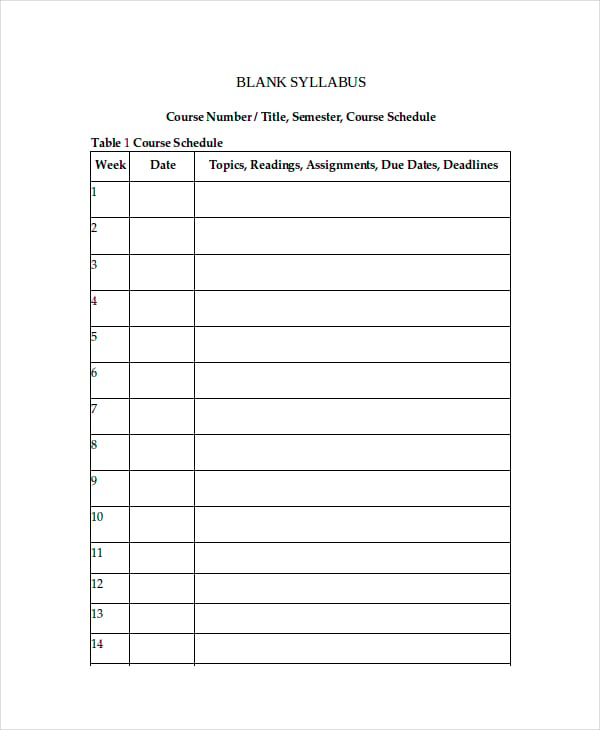
A course schedule provides a week-by-week or class-by-class roadmap. While it's wise to include a disclaimer that the schedule is subject to change, providing a detailed plan helps students manage their time and stay on track.
- Topical Outline: For each week or class session, list the topic or theme to be covered.
- Readings and Assignments: Clearly indicate which readings should be completed before each class and list all major assignment due dates.
- Important Dates: Highlight key dates such as exams, project deadlines, and university holidays or breaks.
Policies and Institutional Statements
This section outlines the rules of engagement for your classroom and includes important university-mandated information.
- Course Policies: This is where you detail your specific rules on attendance, late work, make-up exams, and classroom conduct (e.g., use of laptops and phones).
- Academic Integrity: Include a strong statement about plagiarism and cheating, often referencing the university's official honor code or academic integrity policy.
- Accessibility and Accommodations: Provide the official university statement regarding accommodations for students with disabilities and direct them to the appropriate campus resource (e.g., Disability Services Office).
- Other Statements: Your institution may require other statements, such as those related to religious observances, diversity and inclusion, or student wellness resources.
How to Find and Select the Perfect Blank Syllabus Template
You don't need to create your syllabus structure from thin air. Countless high-quality templates are available to give you a head start. Knowing where to look and what to look for can save you a significant amount of time.
University and Departmental Resources
Your first stop should be your own institution. Many universities, colleges, and even individual departments provide official syllabus templates.
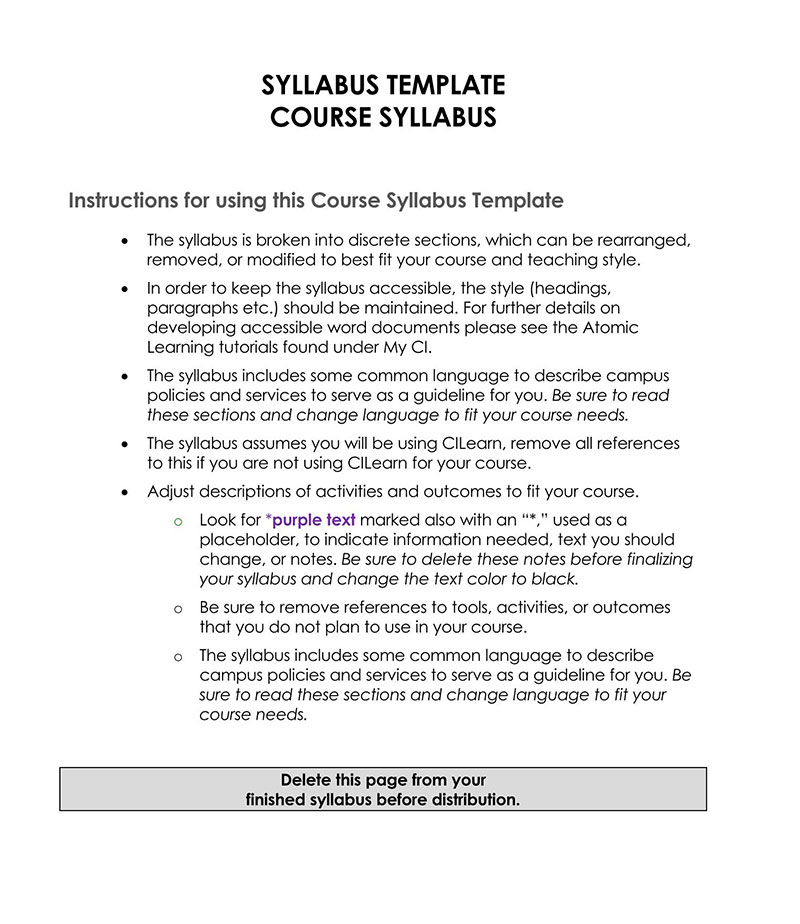
- Pros: Using an official template ensures you include all required institutional statements and policies. It also promotes a consistent student experience across the university.
- Where to find them: Check your university's Center for Teaching and Learning (or similar faculty development office), the provost's website, or your department's internal resource page.
Online Productivity Suites
Common software tools have built-in template galleries that are easy to access and use.
- Microsoft Word and Google Docs: Both offer a variety of pre-designed syllabus templates. You can search for "syllabus" directly within the application's template gallery. These are highly editable syllabus options that are easy to customize with your own content.
- Pros: These templates are convenient, fully editable, and compatible with software you already use.
Educational and Design Platforms
Websites focused on education and design offer more visually appealing and creative options.
- Canva: Known for its user-friendly design tools, Canva has a wide selection of modern, visually engaging syllabus templates. You can customize colors, fonts, and layouts to match your personal style.
- Teachers Pay Teachers: This platform is a marketplace for educators to share resources. You can find many free and paid syllabus templates, often designed by experienced teachers.
- Pros: These platforms can help you create a syllabus that is more engaging and less intimidating for students. A well-designed document is more likely to be read and retained.
Choosing the Right Template
When selecting a template, consider three factors:
1. Completeness: Does it include all the essential sections mentioned above? A good template will have clear placeholders for everything from learning objectives to academic integrity statements.
2. Customizability: Can you easily edit the text, change the layout, and add or remove sections to fit your specific course needs? Avoid overly rigid formats.
3. Readability: Is the design clean, professional, and easy to read? Avoid cluttered layouts, hard-to-read fonts, or distracting color schemes. The goal is clarity, not complexity.
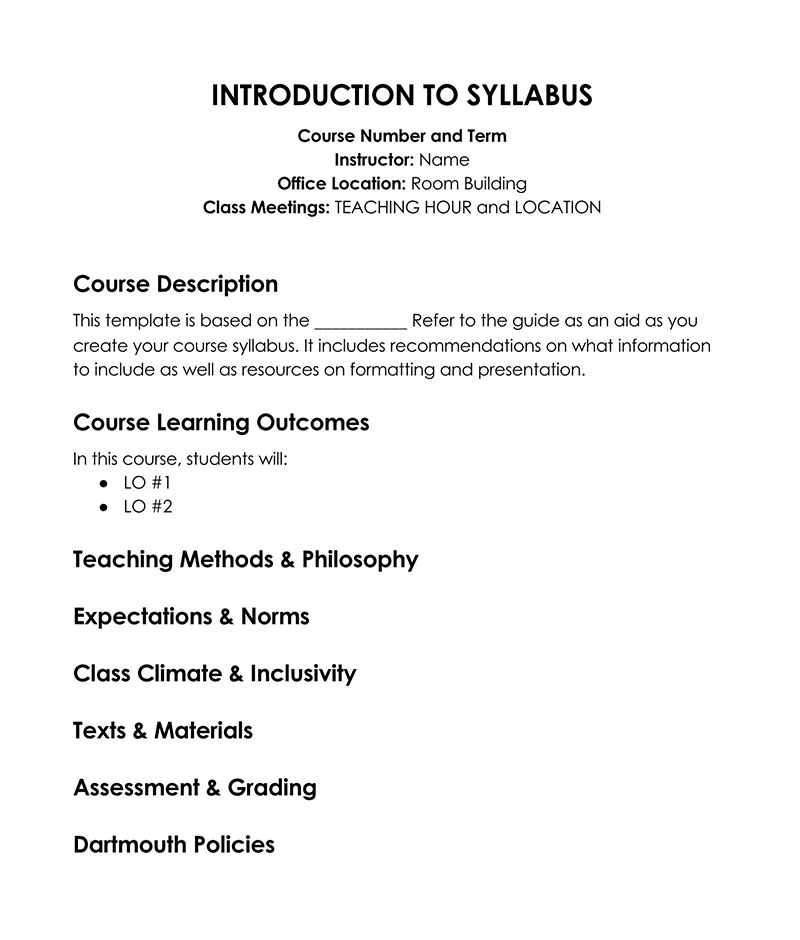
Customizing Your Template: From Generic to Genuine
A template is a starting point, not a final product. The real magic happens during customization, where you infuse the document with your course's unique personality and your own teaching philosophy.
Setting the Right Tone
The language you use in your syllabus sends a powerful message. A syllabus filled with rigid, punitive language ("Students who fail to..." or "There will be absolutely no...") can create a negative and adversarial atmosphere from day one. Instead, aim for a tone that is welcoming, supportive, and clear.
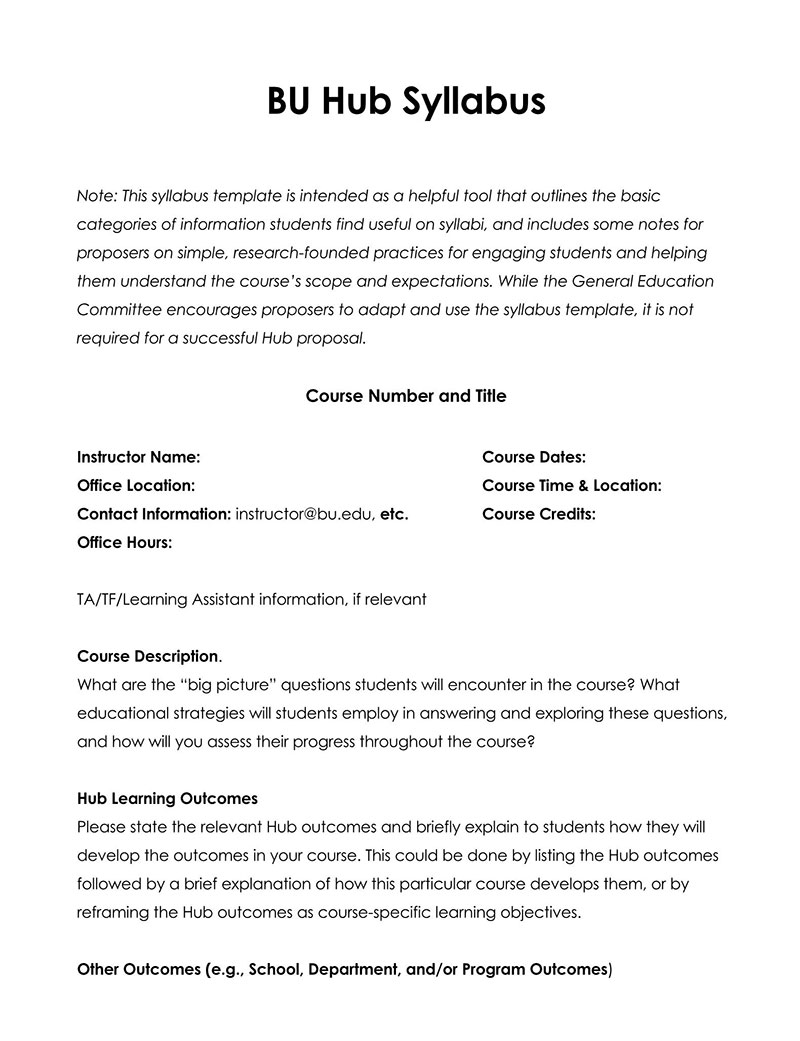
- Use Positive Framing: Instead of "Do not plagiarize," try "Please submit your own original work and cite your sources properly to maintain academic integrity."
- Be Personable: Include a brief, welcoming introduction. Let students know you're excited about the course and are there to support their learning journey.
- Explain the 'Why': Don't just list rules; explain the rationale behind them. For example, explain that your late work policy is designed to ensure fairness to all students and to help them develop time management skills.
Aligning Content with Your Course
Every course is different. Tailor each section of the template to reflect the specific content, goals, and activities of your class.
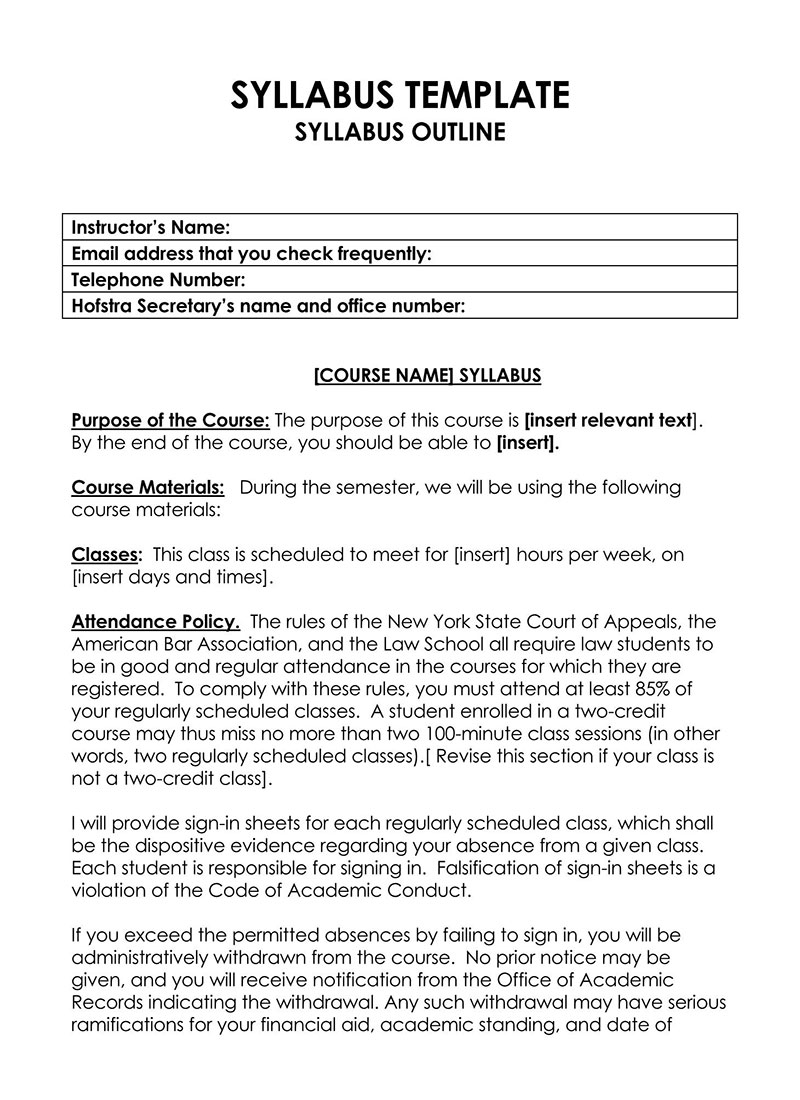
- Refine Learning Objectives: Don't use generic objectives. Write specific, action-oriented outcomes that are directly tied to your course's assignments and assessments.
- Detail Your Schedule: The course schedule is the heart of the syllabus. Take the time to map out your semester, even if it's tentative. This demonstrates your organization and gives students a clear roadmap.
- Specify Your Policies: Your policy on class participation in a 15-person seminar will be very different from that in a 300-person lecture. Adapt your policies on attendance, technology, and late submissions to fit the context and format of your class.
Enhancing Readability and Design
A wall of text is intimidating. Use simple design principles to make your syllabus more scannable and user-friendly.
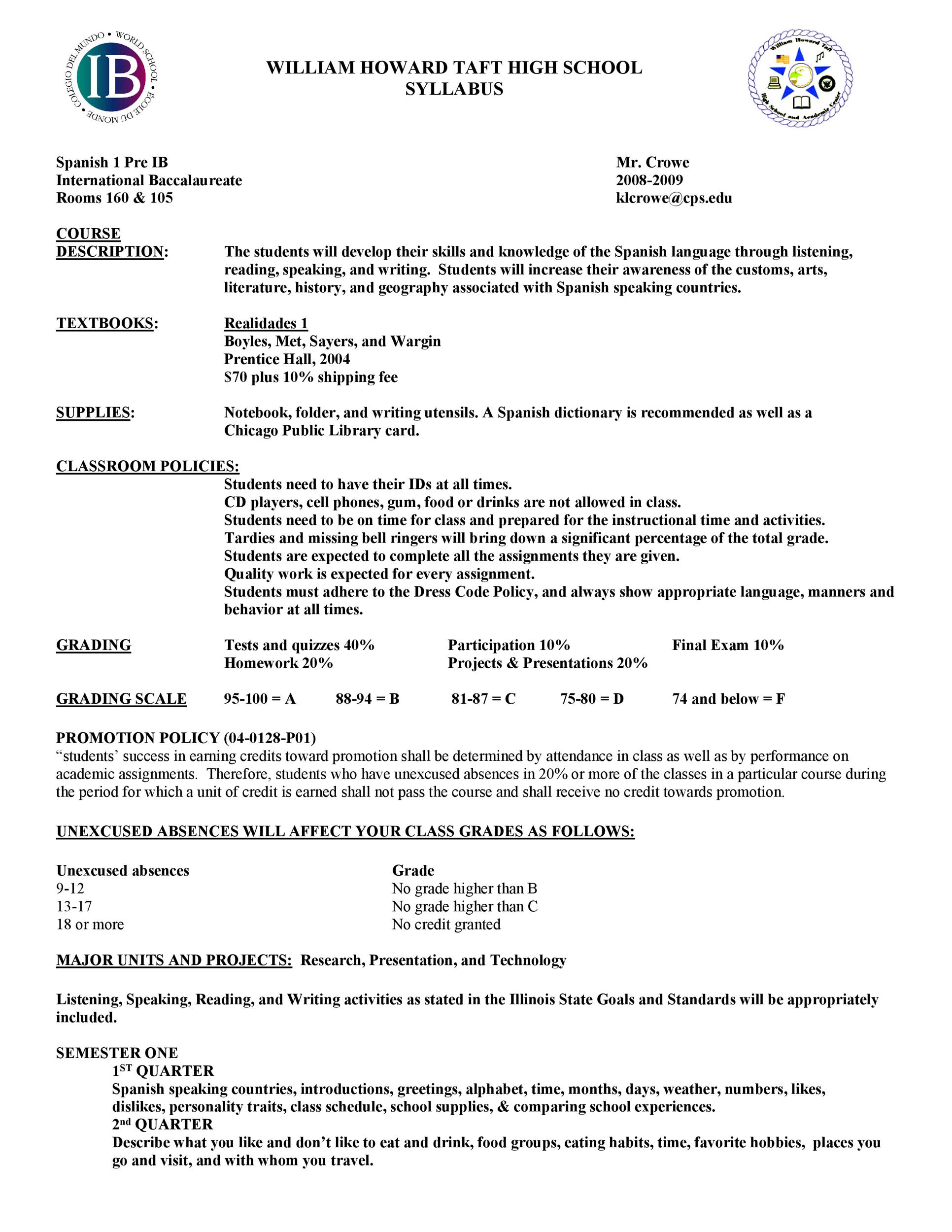
- Use Headings and Subheadings: Break up long sections of text with clear, descriptive headings (like the ones used in this article).
- Incorporate Lists and Tables: Use bullet points or numbered lists for policies and required materials. A table is perfect for displaying your grading breakdown or the weekly schedule.
- Choose a Clean Font: Stick to a simple, professional font like Arial, Calibri, or Times New Roman in a readable size (11 or 12-point).
- Add a Visual Element (Optional): A relevant and professional image or your university's logo at the top can add a touch of visual appeal without being distracting.
Common Syllabus Mistakes and How to Avoid Them
Even with a great template, it's easy to fall into common traps. Being aware of these pitfalls can help you create a more effective and error-free document.

Being Too Vague or Overly Prescriptive
Finding the right balance of detail is key. A syllabus that is too vague leaves students with too many questions ("What kind of 'project' is it?"). On the other hand, a 20-page syllabus that dictates every minute detail can be overwhelming and intimidating. Aim for clarity and conciseness. Provide enough detail for students to understand expectations without micromanaging them.
Forgetting the Flexibility Clause
A semester rarely goes exactly as planned. A guest speaker may cancel, a class discussion may be so productive you want to extend it, or a current event may merit a change in topic. It is crucial to include a short disclaimer, such as: "This syllabus provides a general plan for the course; deviations may be necessary." This gives you the flexibility to adapt the course as needed without violating the "contract" you've established with your students.
Not Proofreading Thoroughly
A syllabus riddled with typos, broken links, or incorrect dates undermines your credibility and creates confusion. Before distributing your syllabus, proofread it carefully from top to bottom. Double-check all dates against the academic calendar. Click every link to ensure it works. It's also a great idea to ask a colleague to look it over for a fresh perspective.
Using Inaccessible Formatting
Your syllabus must be accessible to all students, including those who use screen readers. Use your word processor's built-in heading styles (Heading 1, Heading 2) to structure the document properly. Use descriptive alternative text for any images. When saving as a PDF, ensure you are creating a tagged, accessible PDF. This ensures that the document's structure is readable by assistive technologies.
Conclusion
The syllabus is the foundational document of any course, serving as an essential tool for communication, organization, and expectation-setting. Starting with a Blank Syllabus Template is a smart and efficient strategy for any educator. It provides a robust framework that ensures all critical components—from contact information and learning objectives to grading policies and course schedules—are included, allowing you to comply with institutional standards and save valuable time.
However, the true value of a template is realized in its customization. By infusing the document with a supportive tone, tailoring the content to your specific course, and using clear, accessible design, you transform a generic outline into a genuine and effective roadmap for learning. This process helps build a positive classroom environment from day one and empowers students by giving them the information they need to succeed.
By avoiding common pitfalls like vagueness, rigidity, and simple errors, you can craft a syllabus that is not just a list of rules, but a welcoming invitation to an engaging and well-organized educational experience. Ultimately, a thoughtfully prepared syllabus is one of the most powerful investments you can make in a successful and productive semester for both you and your students.
0 Response to "Blank Syllabus Template"
Posting Komentar